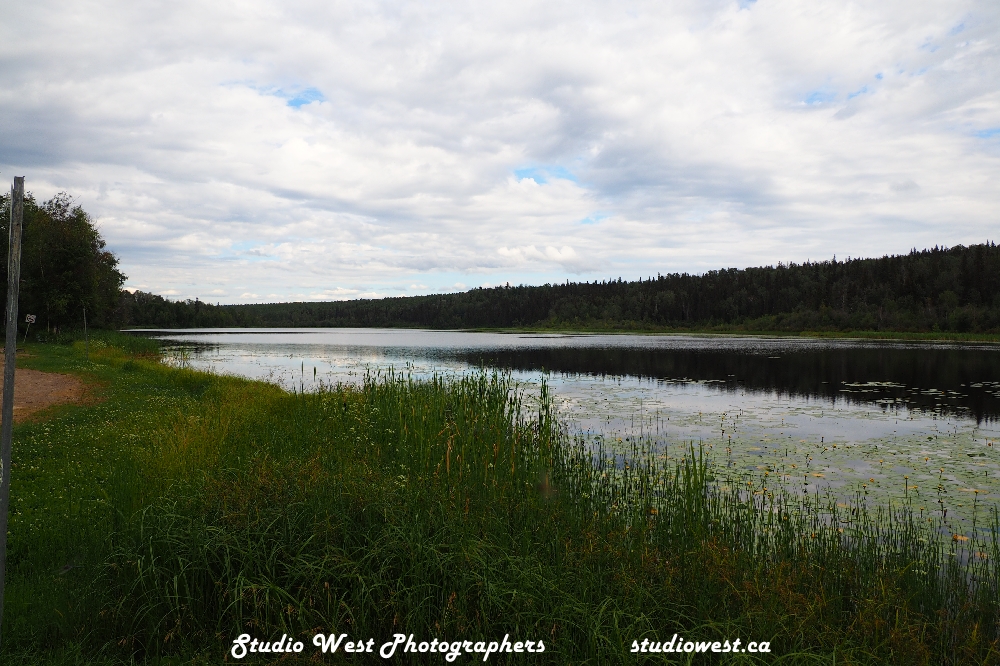
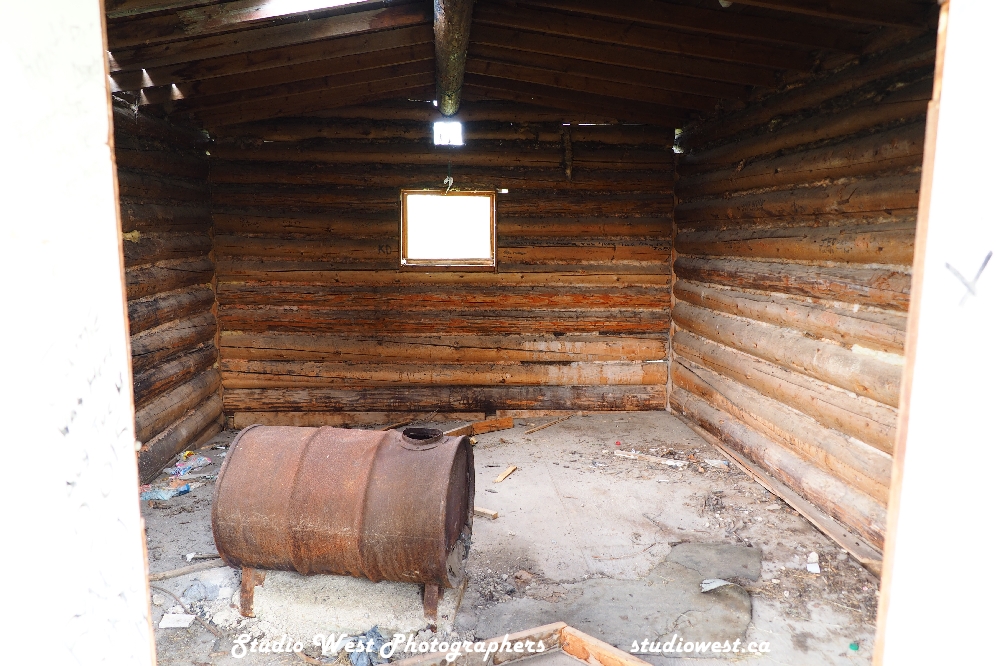
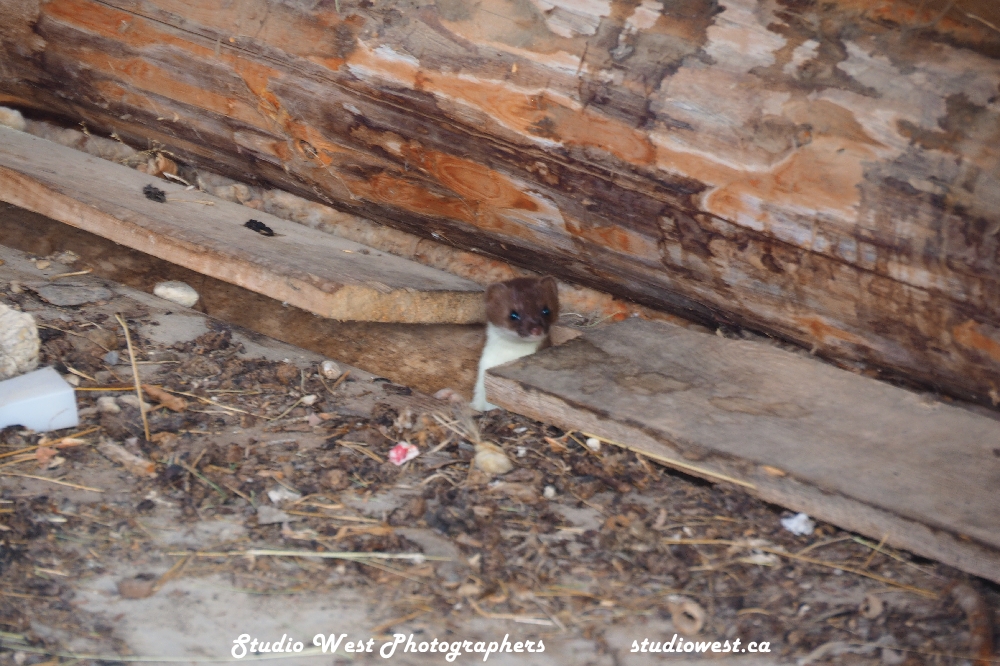
Yellowknife, the city at the end of the road in the Northwest Territories. I have many images to share of this unique community so will break it up into two parts. These are notes from my daily journal which I am so thankful I kept regularly, or I would be lost. We really enjoyed our time with our new friends and the time was a personal refresher for us, so the report is brief, so I hope you enjoy the images. Part two will feature a little more of what we discovered in and about Yellowknife.
Old town Yellowknife on Great Slave Lake.
Day 34 mileage drove today from Reid campsite to Yellowknife, called some friends that we met in Hythe, and are staying in their driveway tonight. They treated us to a nice meal and a tour of Yellowknife, also met their friend John. A lot of history around the diamond mines here and the number of people just squatting and not paying taxes living either in house boats or on lease land is surprising.
For some, home is on the water spring, summer, fall and winter.
Day 35 did not drive at all today, met with Wayne, Annelle and family and John this morning for a nice visit, they are all residents of Yellowknife. Had lunch and Wayne took Charlotte and I by boat up the Yellowknife River to the Tartan Falls by Prosper Lake, did some fishing catch and release. Enjoyed the hospitality and friendship of our new friends for the evening and stayed again in their beautiful back yard. Tomorrow we will explore a little more of Yellowknife before heading down the road, good people will be sad to leave, had a great time.
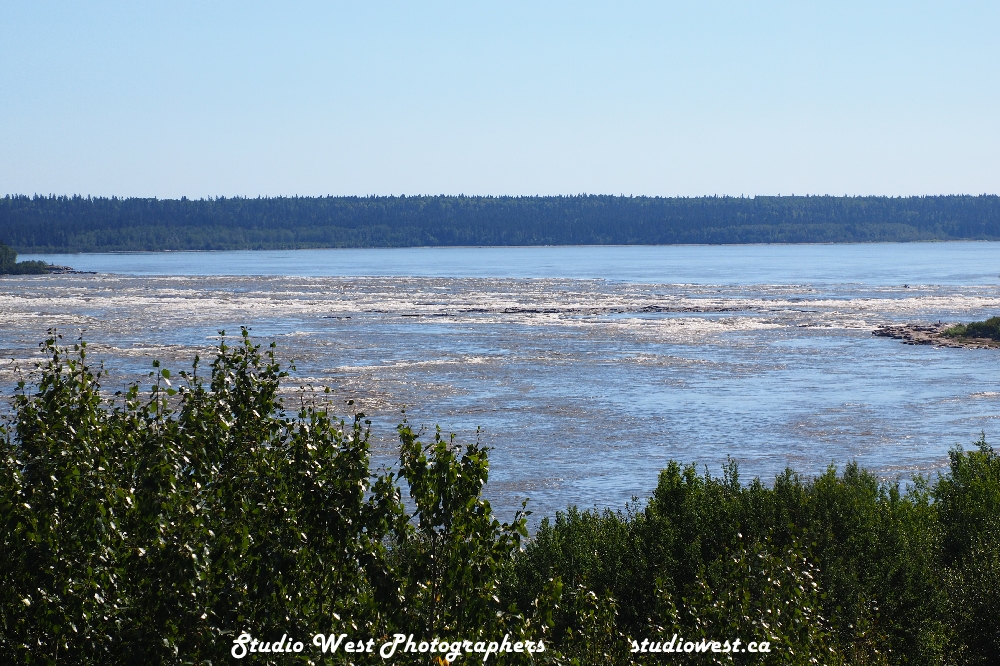
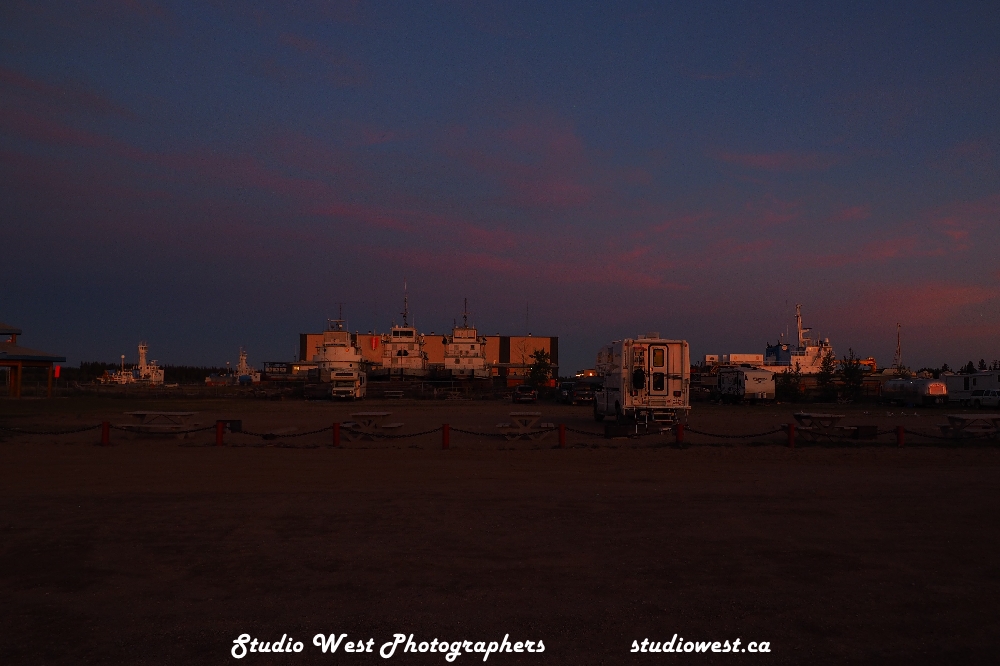
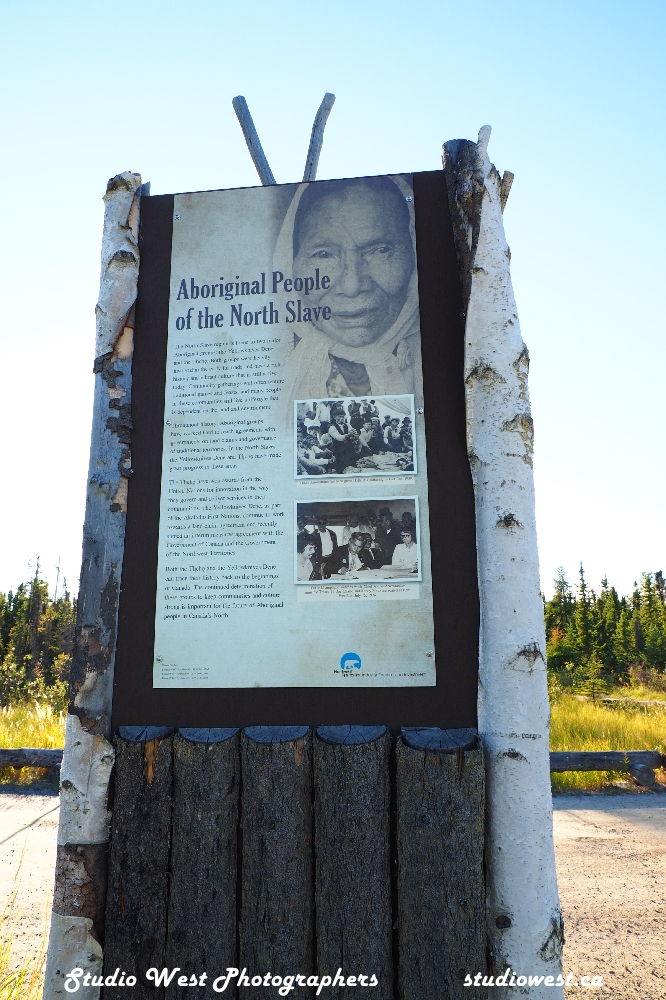
Up the Yellowknife River with our friend Wayne as guide.Best part for us no paddling Wayne was doing all the work and we enjoyed the scenery.They call it Tartan Falls but at this time of year it’s more like rapids.Falls or rapids it was beautiful and calming.Charlotte and Wayne did not catch anything at the falls.I can not even come up with a decent story on this catch. Think I may have played it too long.Poor fishing here today but the view was worth it.This fellow was waiting for leftovers.The river is claiming this abandoned boat.The Rock, a historical feature in Yellowknife. The stairway to the top of the Rock in Old Town Yellowknife.Great Slave Lake and the harbour from the Rock.A must see when visiting Yellowknife, the view is amazing.Floating fish processing plant.Fishing a big part of the northern economy.Transport barges all sizes.They call it being at home on the water in winter, they freeze in and become a remote offshore community.Now anyone that knows me will understand this was my favorite, it was not for sale.A view of the city of Yellowknife or new town from The Rock.Aircraft and float planes are a big part of the transportation of goods and people in the north.When building in the Canadian Shield one builds where you can find a flat area on the rocks and access to it.Built on a rock.Looking out over to the Great Slave Lake from The Rock.Coming back down was a lot easier but well worth the effort.
Thanks for following along and welcome to our new subscribers, your interest is appreciated, and I feel my time is well spent our site is now over 15,000 views. Our next post will feature more about what we discovered in Yellowknife and images to go with it. The community has so much history we could not absorb it all in one visit and we short-changed ourselves this time so that leaves the door open to a return visit. Visit our blog again for part two on Yellowknife and more images.
I had a very interesting call from one of our subscribers, Wayne a fellow RV traveller from Saskatchewan, regarding truck campers and our travels. We love our truck camper and over the years have not found a better way for us to travel and leave a small footprint which readers of this blog can attest to. Wayne shared his impression of their recent travels into Alaska and the Yukon and tells me they enjoyed the Yukon campgrounds and scenery the most and are looking forward to returning to the Yukon and up to Tuk. We have kinda planned on the Alaska trip this summer so would really like your feedback from those of you who have travelled to Alaska in the past several years regarding costs, campgrounds, roads and perhaps favourite areas to see in general. We are torn between more time in the Yukon and or Alaska so any help would be appreciated. The best opinions are from those who have been there and done that. Drop us a note at gerry@studiowest.ca is probably the best way also text may work 306 229-4542
That’s it for this go round hope to hear from you or see you down the road.
These locals have the right of way and can be found just about anywhere along the roads.As we learned the proper name is Bison not Buffalo.
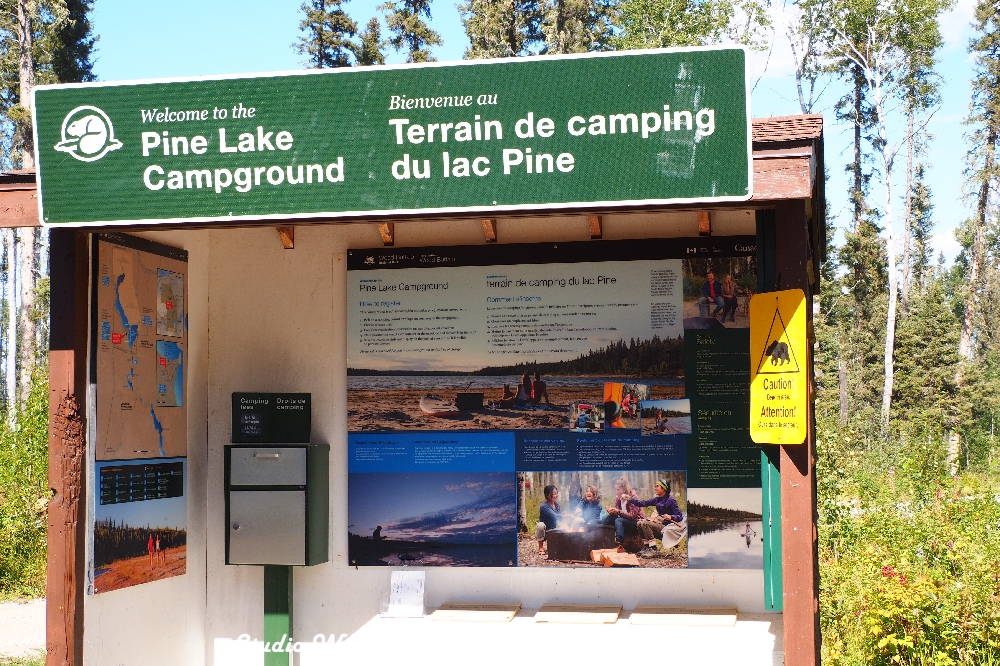
Day 31 Mileage 6,557.6 kms. We travelled 340.5 kms today from Fort Providence to Yellowknife. After touring Fort Providence we headed out across 200 kms of burnt out forest, and forest in an ever-changing variety of trees. We ran into several wood bison herds on the way and all had young by their sides. We also spotted a black bear just outside the Fort. We took our time travelling, checking out spots we could boondock on our way back. About 100 kms from Yellowknife the landscape changed drastically from sandy forest land to rock and the closer to Yellowknife the larger the rock size and amount of rock. Yes we are in the Precambrian Shield of Canada where they build cities on a rock. We got in later and the truck and camper were totally covered in mud from gravel roads and construction so after several frustrating attempts we finally found a carwash, $22 later it was near clean. We then fueled up $1.79/litre and checked in at the Fred Henne Territorial Park at $33.50. The park has showers, swimming area, and boat launch and washroom facilities. Being as it is on the outskirts of Yellowknife the nearby airport and highway make it a bit noisy. We had requested a non-electrical site and were told they were all electrical. Later finding out there must have been a communication breakdown as we found a number of un-serviced sites. See what tomorrow brings.
Closer to Yellowknife the landscape changed as we entered the Canadian Shield.Built on the rocksWelcome sign to Behchoko native community along the road to Yellowknife.No french here.Our first view of the Great Slave Lake from the northwest end.Great Slave Lake, one of the largest inland lakes in the world.Home of the Thcho people North Arm Territorial Park.A proud heritage lives on in the north.Our stay at the Fred Henne Territorial Park on the outskirts of Yellowknife.A very unique campground built amongst the rock.Great hiking and a large beach area are features of the park as well as the close proximity to Yellowknife.The park has many areas of interest regarding the native settlers and people of the area. Not gold but diamonds, and the early mines lots to discover.An original log cabin in its natural setting Still weathering the storms and hand built.The windows appeared to be low to me.Beauty is everywhere if one looks.
Day 32 Mileage 6,656 kms travelled only 98.3 kms today from Yellowknife to the end of the road then back to Reid Territorial Park campground. We picked up some supplies at Co-op in Yellowknife and found grocery prices quite comparable with those in Saskatoon some items a little more some a little less but pretty much on par. We then headed to the end of the road down Highway 4. The end of the road is at Tibbet Lake where in the winter the ice road starts so semis can haul supplies to the diamond mines further north. A beautiful drive and a really nice stopover area at the roads end. The water is clear and the air totally unpolluted fresh. The drive takes you up and down a curvy road through rough rock landscape of the Canadian Shield. On the way back we stopped at Reid Lake campground. The campground offers dry camping only but has showers, potable water and sani dump. This is possibly one of the nicest campgrounds we have stayed at on our trip and there have been some really nice ones. The tent camping facilities up in the rocks are fantastic and the RV sites are large, well maintained and not a bad one on the loops. Our mid-week rate was $11.81 and the weekend rate (Fri. to Mon. $23.63 taxes in). Firewood not included but available at $10/bundle. Reid Lake is great for canoeing, fishing and the start of a canoe route that finishes in Yellowknife. We were not planning on staying but booked 2 nights which was all that was available to us. Unfortunately, as with all parks that offer online booking reservations weekends and prime time the sites are all booked but not always utilized. We loved the Yukon no reservation first come first served policy worked in the past for campgrounds and works just fine now for the Yukon Parks and tourists.
On our way to the end of the road. Starts out paved twisty and a lot of hills and valleys.It always starts out paved then the pavement ends.The sign was down but we found the end of the road it stops at water’s edge and that’s as far as you get until freeze up.Well worth the drive and a beautiful quiet stop with no more road to travel.Always time for a break from driving.Our lunch stop at the end of the road.A great view from the end of the road just natural wilderness.The Canadian Sheild is definitely unique and a must see to realize the gigantic size some rocks can be.
Day 33 No mileage today as we did not move we enjoyed Reid Lake campground it was quiet this morning a slow start. We talked ourselves into inflating the Sea Eagle and going for a paddle to see the rapids and totally enjoyed a morning on the water. We managed to dock on the rocks and hike overland to see the rapids and the effort was worth it. A day of hiking, showers, camper maintenance, I also managed to get some writing done on my blog as we will be leaving for Yellowknife tomorrow and cell coverage. I took time out of my writing when a fellow I had been talking to from Ontario asked me to fillet and debone a couple of Jack he had caught with his grandson. So after a two fish deboning class I decided never to tell anyone I knew how to debone Jack again. An evening of sitting around the fire and a short hike, it’s getting busy and nosier now as the weekend locals are arriving. We’ll be on the move again tomorrow it was nice and a great campsite. We had threatened some friends we met while in Hythe on our way to Dawson City we would visit them in Yellowknife sometime. Well as we were departing their daughter said ‘see you in Yellowknife’ at the time considered a bit of a joke between us as we were not planning to head to Yellowknife on this trip. Well as you know our plans changed, we enjoyed their company in Hythe and tomorrow we would end up on their driveway, we did phone to warn them, and lesson learned be careful who you invite they may show up.
The road leading up to Reid Lake Territorial Park home for the next two nights.Reid Lake home for two nights would have stayed longer but online reservations trumped being there in person, so we had to leave.Lakes everywhere this the view from Reid LakeReid Lake.Just about as dark as it gets up here at Reid Lake.It’s no wonder this campground is popular with tent sites like this and not a bad RV site in the whole campground.Caught this fellow on a hike not sure what it is looked like it could be a Black Fox if there is such a thing.We finally inflated the Sea Eagle and went to check out the falls we were told about by the other campers.A very beautiful rocky shoreline.We hiked across to the falls having stopped on shore up stream.The falls were more like rapids but still not into trying to navigate them.Trees water and rocks it just does not get better for me.The camera or perhaps the photographer cannot do justice to the beauty one sees.Just could not help photographing the contrast.Now this is tenting near Reid Lake.
Thanks again for following along and hope you enjoy the photographs we really enjoyed the Northwest Territories and the vast wilderness. In my next blog we will share some experiences and photographs of a very unique northern city Yellowknife NWT.
We are now back home at the cabin in Saskatchewan and slowly catching up on sharing our travels to the Yukon and NWT returning through northern Alberta and Saskatchewan and you’r invited along….hope to see you down the road!
Day 28 Mileage 8596.4 travelled 232.9 kms today from gravel pit near Fort Nelson entering the Northwest Territories to Fort Liard free recreation campground. There is a fire ban in effect here so no fires tonight even though they have free firewood. Nice recreation site with 12 free campsites, so far only two RVs here, pit toilets, fire rings and tables alongside Hay Lake just outside of Liard. We filled up in Fort Liard today for $1.90/litre so one of the cheapest so far. Our NWT experience is just beginning to unfold, drove through construction on the gravel section after crossing into the NWT. The drive from Fort Nelson has been beautiful spotting lots of buffalo along the way. Highway to the NWT is fantastic, BC really does have good highways. Very relaxing drive after the Alaska Highway, met probably four other vehicles in the 200 kms and were passed by two gravel trucks. At Hay Lake there is a lot of ground clover and I have never seen so many bumble bees, the ground is alive with them…perhaps no crop spraying here.
Fort Liard is at the junction of the Liard and Petitot rivers and has a population of around 600. The area’s relatively warm climate earned it the nickname of “Tropics of the Territories”. The South Slavey Dene have resided here for many generations hosting traditional gatherings and passing down oral history. They traded with Euro-Canadians in the 18th century and later the Hudson’s Bay Company.
A long road ahead as we leave BC, Fort Nelson on our way to Yellowknife, NWT.Paved from Fort Nelson to Fort Liard on the BC side. Highway 7 was very rolling to say the least, but excellent condition.A lunch break and stretch in one of the many gravel pits just off the highway.We found gravel pits not used as an excellent place to over night or simply take a break from driving.Our campground outside of Fort Liard right on the lake.Hay Lake viewed from the back door of our truck camper at Fort Liard.We really appreciate the effort local residents put into these campgrounds that are provided free of charge.
Day 29 Mileage 5,889.5 kms today we traveled 293.1 kms. We drove from Fort Liard on Highway 7 or the Liard Trail to the Junction of Highway 1 which was all gravel. We then took Highway 1, a paved highway to the ferry on the Liard River and crossed to Fort Simpson. It rained all night in Fort Liard and throughout the morning and the mosquitoes were terrible. We drove close to 90 kms on muddy roads then into sunshine for the rest of the day, temp around 20C. We will spend the night at Fort Simpson Territorial Campground. Very nicely kept with pit toilets and showers that were closed, there are only a few of us here tonight. Fort Simpson is known as the “Gateway to the Nahanni” since it is used for a lot of people as a starting point for trips to the mountains by boat or by plane. Fort Simpson is known by the Dene as Lidlii Kue (“place where they come together”). Fort Simpson has a population of 1202 residents a community first formed as Fort of the Forks, a Northwest Company fur trading site. In 1882, their rivals the Hudson’s Bay Company built a trading post here and was named after George Simpson, Governor of what was known then as Rupert’s Land. There is a lot more history to be found here for those interested or just enjoy the beauty of the wilderness. Extra note when we were checking out and paid for our campsite at Fort Simpson the camp host gave us a very nice NWT lantern and a collapsible pail and some very helpful information on the NWT which was very good of him. A reader and truck camper traveller who lives in Fort Simpson also was very helpful in providing some local information and I thank him for that. The community information centre also provided us with potable water for free. On the topic of water I bought the blue carbon filter to fill with and it has been a great investment as it removes taste of chlorinated water and purifies it somewhat.
It was now going to be gravel all the way to Highway 1, we were in no hurry and the drive was beautiful starting out rainy but drove into sunshine.Our first small herd of Bison along the way.These Bison are not intimidated by vehicles and will move when ready, so you wait.Blackstone Territorial Park between Fort Liard and Fort Simpson. A beautiful well maintained and kept Park with showers and a beautiful view.Obviously these chaps like the park as well.The Liard River with the Franklin Mountains in the back.The view from the driver’s seat.Our ride awaits to cross the mighty Liard River on the way to Fort Simpson.We would have to return on this ferry after visiting Fort Simpson.A lot of buildings like this one reflecting the history of the area.The huge Liard River popular for northern canoe trippers.Fort Simpson is a popular spot for those wishing to gain access to the Nahannie Butte area in the Franklin Mountains for backcountry canoeing and camping.This beautiful structure reflects the past and future of the local resident’s pride in their heritage.
Day 30 Mileage 6,217.1 kms travelled 327.5 kms today from Fort Simpson to Fort Providence. We travelled Highway 1 on pavement to the Jean Marie River where it tuned into gravel until the junction of Highway 3 to Fort Providence. As per the course in our travels there was construction on 1 and on 3 the road was extremely rough on Highway 3 into Fort Providence and very dusty. On the way we stopped at Sambaa Deh Falls flowing through a deep rocky canyon. On the way we crossed the Deh Cho Bridge which is a 1.6 km-long cable stayed bridge across the Makenzie River that replaced the ferry. We will stay the night at the NWT Park here outside of Fort Providence right on the Majestic Mackenzie River cost $29.50 with power and shower facilities, time to charge up everything and shower. The campground was all pull through and all sites electric and very well kept with nice shower facilities and washrooms. I fueled up today here for $2.269/litre. Fort Providence has a population of 797 people and is situated 5 kms down an access road west of Highway 3. The community is located on the banks of the Mackenzie River. A major landmark in the community is the Roman Catholic Our Lady of Fort Providence church.
Along the highway to Fort Providence, we saw many little buildings in rest stops like this one. A wood fireplace was inside for those travelling in winter a place to warm up. Now in poor shape they are being replaced by modern outhouses (with no heaters).Inside the NWT rest stops of the past featured warm up heaters like this one.The rest stop is now home to this little fellow who was checking on who came to visit.A short stop along the way to hike into this canyon of the Sambaa Deh Falls.It was hard to capture the size and scope of this 1.6 km bridge.Another attempt to capture the Deh Cho Bridge a cable strung bridge across the mighty Mackenzie River.The long span cable bridge opened up the communities all season as before the only crossing was by ferry.
The mighty Mackenzie River still used to barge supplies to the Arctic Ocean and the communities along the wayA great campsite on the Mackenzie River outside of Fort Providence.The view out our back door for the evening.The view just kept getting better.Proof the sun will set after approximately 20 hours of sunlight.As dark as it gets in August.First established churches are landmarks of the early missionaries during the fur trading days. The before established Providence Mission.This one appears to be still well used.More to come on our journey.
That’s it for this post, hope the ride was not too rough but glad to have you along. Next post our journey to Yellowknife and the end of the road. Subscribe to be notified of new posts it shows your interest and any questions on travel will be answered best way is to email me at gerry@studiowest.ca
Have a great day and those still travelling may the wind be at your back….see you down the road….Gerry and Charlotte
The only positive about back tracking on the Klondike Highway is you get to view the landscape from a different angle and get to check out different campgrounds on the way back.
Our last campsite before leaving Dawson City not pretty but did the trick as there were showers.
Day 23 Mileage 4293.3 drove 459.3 kms today, more than planned. Left Dawson City this morning with the plans of going to Tombstone National Park on the Dempster but it was rainy, muddy and lots of construction on a bad road to begin with, we opted to continue on. We stayed overnight at a Territorial Park Fox Creek a beautiful spot right on the lake with water pure and clean, would highly recommend this campground nice creek running through it, good tenting sites and could accommodate fairly large rigs. The drive today was bad, lots of construction, long wait times and very rough roads through the construction and very muddy as well. We were stopped for a while for a semi that was on fire, no one was hurt.
Back on the Klondike Highway.View along the Klondike.The vast unspoiled Yukon as far as one can see.The view just keeps getting better.It’s really no wonder why so many from other countries are in awe of the vast unspoiled area.A little lesson along the Klondike Highway. Beringia the Eastern edge of a landmass stretching from Siberia through Alaska to the Yukon.I love the frontier look to many of the local businesses in small communities along the way.Camping on the lake at Fox Creek Yukon Campground all the beauty for $18 a night.Peaceful and quiet.Beautifully clear water in a gorgeous setting.The beautiful national flower of the Yukon the fire flower.The national flower is everywhere lining the ditches and hills.When it’s this good why would one want to leave…well Yellowknife was calling.Fox Creek and the Fire flower.Aptly named Fox Creek ran through the campground.Hiking was beautiful but the mosquitoes also enjoyed the creek out of the wind.This campground was a photographer’s dream.Unfortunately, this trucker was not having the best of days.One never knows when you get to meet some interesting fellow travellers.
Day 24 Mileage 4476.9 traveled 183.5 kms today from Fox Creek campground south of Carmacks, Yukon to Squanga campground another Territorial campground on a beautiful little lake. The trip included a stop at Whitehorse the capital of the Yukon, around 35,000 of the Yukon’s 45,000 people live there so is a very busy center and a hub to the US and Dawson City. They say there is gold in the Yukon and there still is if you can file a claim on a carwash….A wash back home that would be around $12 set me back $38.50 here. It’s a gold mine with all the construction going on and the many gravel roads. You don’t see many shiny clean vehicles around here, now I know why. We picked up an extra gas can for our trip across to Yellowknife and fueled up for $1.99.9/litre. It’s too bad we have to follow our tracks back but have been told by several travellers that #4 or the Campbell Highway is very rough. We have had enough rough roads on this trip with construction everywhere. When asked where we spent our summer we can say visiting road construction sites. Rained today but stopped long enough to enjoy a campfire this evening we will see what tomorrow brings. We love this first come no reservation camping works well and campsites paid for are being USED!
Squanga Campground for only $18.Camp at Squagana Lake.Loved the variety of wildflowers everywhere.Evening comes late in the Yukon get used to 20 hours of daylight each day.Proof it’s not always daylight, the end of a beautiful day at Squanga Lake.Just one of many bridges along the Klondike Highway.Just clouds, the fires were out when we traveled through.Driving into the clouds, more mountain driving than I anticipated.Just miles of lakes and forest in the Yukon photos do no justice to the beauty or vastness.
Day 25 Mileage 4808.5 km travelled 331.6 kms today from Squanga Lake between Carcross and Johnsons Crossing to Watson Lake campground. Stopped for a rest and fueled up in Teslin home of the longest bridge on the Alaska Highway. Misty and rainy tonight got a fire going and worked on my blog while we have internet. Mostly rainy today high 17C and cool tonight and damp.
Sign says it all.There are no bad Territorial campgrounds in the Yukon.The firewood supplied requires more than a hatchet.The Yukon campgrounds are all well-kept and clean.Traffic is minimal on the Klondike Highway.The views just never stop, Summit Pass.Just thousands of kilometers of beauty.
Day 26 Mileage 4836.6 only traveled 28 kms today. Stayed over at Watson Lake campground and went into Watson to use the free dump site provided by the town and we got water for free from A Nicer Motel in Watson which we really appreciated, offered to pay something. The manager said everyone needs water and it don’t cost here. With good cell signal our Wi-Fi worked great and I finished another blog segment and got it uploaded. The truck needed an oil change and it was really hard to find anyone to do it. I bought an oil filter from Bumper to Bumper and an air filter. They gave me the number of 4four mechanics in town saying they may be able to do the oil change which was nice of them. A local lady steered me down the street to a shop that opened recently Alaska Highway Truck and Towing. The guys there took me in right away and did a great job a little rich on price as I supplied the oil filter and the change cost me 179.47 but it was done. Filled with fuel at 1.99/ litre, and changed the air filter, another maintenance day for the truck and camper. We spent a relaxing evening around the fire in a very quiet Yukon campground. Tomorrow with sadness we leave the Yukon for northern BC then hopefully on to the NWT. Today we met an older man on a motorcycle from Toronto who has been on the road for a month and is slowly working his way back home. He has traveled Northern Manitoba, Saskatchewan, Ontario and the south of those provinces as well on his motorcycle and most of Canada over the years. We have seen lots of motorcycles travelling these highways this summer.
Winding mountain roads keep one alert at all times.The vast wilderness makes one feel very small, the view from Summit Pass.A few friends along the highway.That’s close enough!Nap time for this young one.The high Summit Pass, beautiful highway but construction right at the pass when we went through.Rock and trees just add to the natural beauty.And the road continues…And continues…There are a lot of pull outs to enjoy the beauty and stretch one legs, this one at Muncho Lake.The Yukon rivers small and large are full and fast flowing everywhere.The road along Muncho Lake was the most expensive section of the Alaskan Highway.
Day 27 Mileage 5339.8 traveled 503.2 kms today from Watson Lake Campground to Fort Nelson, BC a huge drive through some mountain ranges including the Summit Lake pass, the highest on the Alaska Highway. Very scenic route rated triple A. Arrived at Beaver Lake Recreation campground to find it filled with some undesirables who were setting up to have themselves a good old bush party. We decided to leave and found a nice quiet gravel pit pull off along the Highway Seven. Backtracking is always anti climatic but traffic was light and the views awesome. Tomorrow, we head for the Northwest Territories and Yellowknife, its capital.
I am definitely running behind on my posts but the best is yet to come with our visit to the Northwest Territories and the end of the road past Yellowknife. Thanks for your interest and following along. At the end of this trip I will definitely summarize our feelings, the good and the bad along with things we would do differently including shedding excess weight from the truck camper. Enjoy the images, subscribe to be notified by email when we post….hope we see you all again down the road.
PS: for those of you with truck campers or vans and are going to be winter or late fall camping check out my post on our DC top DC charger install definitely the be best addition yet have not used our generator since.
No trip to Dawson City is complete without seeing the Amazing Dredge NO.4. This massive gold digging machine is huge even by today’s standards of big equipment. I was so impressed with this bit of our history and in particular the dredges of the Yukon. I am featuring it totally in this blog. Some of you will know the history behind it but perhaps others may not so here is my best attempt at describing the amazing Dredge NO.4 and my images of this historical machine. Thank you to Parks Canada for the input in salvaging this part of our history and the work already gone into restoring this monster machine, worth every penny of our tax dollars for sure.
Now a Parks Canada site.
As early as 1870 prospectors were drifting into the Yukon in search of gold, but the discovery of Skookum Jim (Keish), Dawson Charlie (Kaa Goox), and George Carmack in the Bonanza Creek area then known as Rabbit Creek changed everything. It sparked a gold rush that would see over 40,000 hopeful gold seekers from the “outside world” rush into the Yukon making Dawson City boom and put the Yukon on the map. What started by thousands with picks and shovels would last only a few short years and by 1899 prospectors were chasing new dreams in Alaska and machines were replacing the men with pick and shovel.
The amazing Dredge NO.4Floating 300.000 tons of timber and iron.Conveyor to dispose of the tailingsThe huge boom for the excavator buckets.Massive chain link and cable to control the digging.From inside the control room.Just one of the buckets on the dredges main boom.Rows of replacement buckets for the Dredge.
By 1905 regulations changed from individual claims to allowing larger corporate claims to dominate the Bonanza Creek and other areas and large dredges were becoming the prevalent method for mining the gold. The huge pieces required to build these machine were brought by railway and steamship and were assembled on site. It amazed me to find out these dredges were electric powered, something that would make “Justin” very happy and huge amounts of electricity came from miles away from a plant built on the north fork of the Yukon River. The demand for water was also enormous and the Yukon Ditch, a system of flumes and trenches, provided water from nearly 70 miles away. The engineering and manpower to pull this off is amazing even today.
Now for the feature presentation the amazing Dredge NO.4 it is two thirds the size of a football field in length and is eight stories high. This vessel, as it was a floating machine, inched along year after year in a pond of its own making and was the largest wooden-hull bucket dredge in North America. It dug gold bearing gravel at a rate of 22 buckets per minute. It operated 24 hours a day for approximately 200 days per season. This machine would only move half a mile per season leaving behind a massive pile of rocks forever changing the landscape of the area. Over 46 years it unearthed nine tons of gold, grossing 8.6 million dollars.
Levers everywhere in the control room to control the digging and winches to move the Dredge.Massive gears and cable the main control of the Dredge.Everything on the Dredge No.4 was huge.A feat of engineering.All powered by electricity.Huge rollers in which the trommel turned.
Once in thawed ground an anchor (the spud) would be lowered to act as a pivot point. Cables attached to buried logs in the surrounding hillsides were able to control the dredge movements in the pond with winching systems on the dredge. The huge buckets on the bow dug up the gravel and deposited it into a hopper which fed the gravel to the trommel. The trommel was a constantly rotating tube with various sizes of holes along its length of 50 feet. Water was sprayed inside the trommel to wash the gravel and the gold would settle into the sluice boxes for collection. The waste gravel and rocks would exit along the stacker belt to the rear leaving tailing piles in a scalloped pattern still seen today. When it had dug to its maximum depth the anchor would be raised and the dredge move ahead approx. 10 feet filling the pond with water creating its own pond on which to float.
Very large electric motors powered the entire Dredge No.4 .Huge amounts of water was moved to provide water into the trommel to wash away the tailings.The rotating trommel which separated dirt from gold.A look inside the trommel and the pipe to carry water to wash the gold from the dirt.The tailings would exit the trommel by this conveyor creating tailing pile still seen today.The gold would settle to these pans which had different sizes of holes and mats. Even the gold dust was recovered by the mats.Tailing piles from Dredge No.4.The workshop for maintenance inside the dredge’s main floor.Huge timbers and Iron the bones of Dredge NO.4.
The amazing Dredge NO.4 was operated by only a crew of 4 and the shifts were 8 hours a day, 24 hours a day. The Winchmen controlled the digging and movement of the dredge. The Oiler apprenticed under the winchman and made rounds oiling the moving machinery. He was also responsible for the crew’s hot lunch. The Sterndecker was stationed at the end of the trommel and kept an eye out for blockages to the stacker belt. The Bowdecker was the rookie, standing on the bow with a shovel ensuring all dirt scooped up by the buckets was inside the buckets and not hanging out. Others were the shore crew the bullgang crew of 5 who worked outside usually in mud manoeuvring the electrical and winch cables. The Dredgemaster managed the fleet of dredges and keep all records along with the overseeing of the maintenance. In a season the dredging companies would employ approximately 750 men, in 1912 there were 13 dredges operating in the Klondike.
The Amazing Dredge NO. 4 ceased operations in Nov 1959, after sinking where it sits today. In 1991-92 Parks Canada began extensive restoration of the dredge, freeing it from 18 feet of ice, silt and mud after a dam had broken. It was refloated and now sits in its present location.
Parks Canada Dredge NO.4 now a historic site for all to see.
This is my brief report on our visit and tour of the NO.4 Dredge just outside of Dawson City, hope it kind of explains a bit along with the photos well worth our trip to the Yukon definitely a must see.
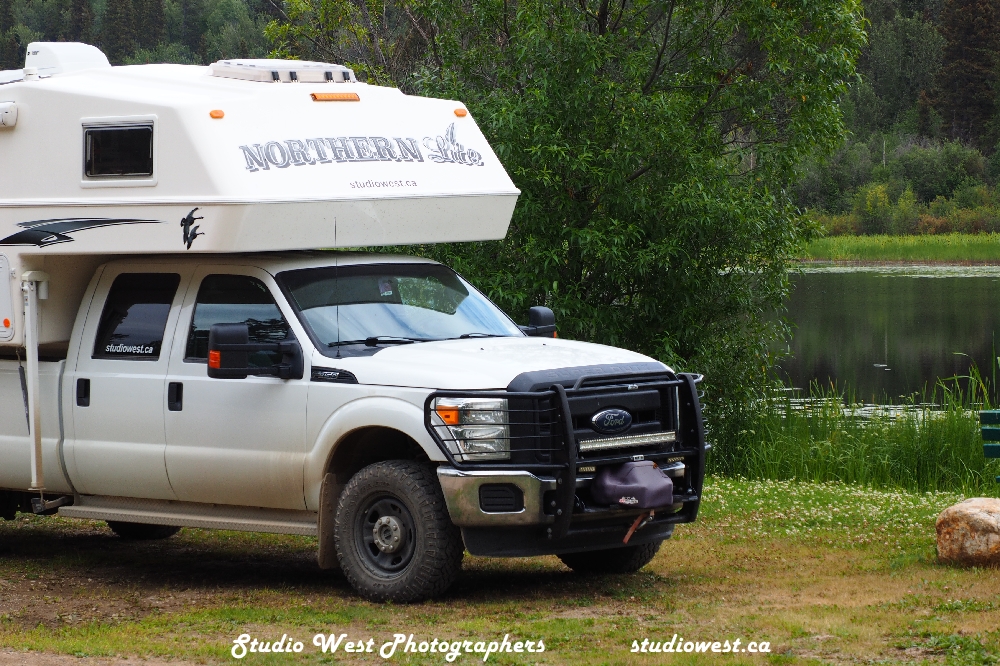
My next blog, a few more of our discoveries we found along the Yukon Highway (Klondike Highway to be exact). Trying hard to keep our family and friends updated on our travels but travel keeps getting in the way so I am running a little behind but have taken a week to sit still and hopefully catch up. We backtracked on our way to visit some special people and the great city of Yellowknife in the Northwest Territories. Thanks to those who recently subscribed to be informed of future posts by email I hope you enjoy the images and a few details of our trip. Our truck camper has been a great home and the good old Ford F350 just keeps on going…thanks and we hope to see you down the road.
Mon. July 25th. Day 22, Our goal to visit the Paddle Wheeler Graveyard. Mileage 3,834 kms, travelled only 78.7 kms today. We started our day at the Yukon River campground today with a campfire coffee this morning. To access the Yukon River campground requires crossing the Yukon River on a free ferry and is situated at the start of the Top of the World Highway to Alaska. The campground is beautiful with around 100 sites running along a very full Yukon River and some sites are back into the forest and very quiet. It’s a Territorial campground $18 pre purchase passes or online or $20 cash at the site as in other Territorial parks in the Yukon. Just north of the campground is what is referred to as the “Paddle Wheeler Graveyard”. We were told due to the high river it may not be accessible but luck was on our side as there was a path through the bush to the site. A short hike after breakfast across several small streams one of which I dropped my camera in we found the site. The reason I went with the Olympus OMD for a travel camera is it’s suppose to be water proof, it was tested and passed. It’s hard to imagine just how big these steam powered paddle wheelers really were and now in a state of decay along the river they once travelled. We are told approx. 250 of these ships traveled the river during the gold rush days. The rest of the day was spent getting supplies needed to leave, water, propane some grocery items and fuel up.
The giants of the river slowly being reclaimed by the river.Timbers and metal now all that remains.If one could only know the stories behind these large ships of the northern rivers.A lot of work required to keep these boilers fed.The books could not possibly describe this scene.Another check mark on the bucket list a dream come true.A sad ending for these once necessary forms of transportation.Only the hubs of the paddle wheels left.With today’s lumber prices one of these baby’s would have cost a fortune.
A little information on the site just outside of Dawson city. The paddlewheel graveyard is tucked secretly among the spruce trees along the west bank of the Yukon River. Once considered the primary mode of transportation in the region, these boats were abandoned when ground travel became more popular. Here they were docked and now sit in decay, huge timbers and decaying wood as the river slowly claims them back. The huge smokestacks and boilers rusting in among the wooden hulls and broken paddle wheels.
Since the discovery of Klondike gold, hundreds of paddle wheelers ruled the Yukon River. These mighty ships braved harsh conditions in remote areas, supplying Dawson City, Whitehorse and Fairbanks with a diverse range of goods and services. With the addition of airplanes to its transportation network in 1937, and the construction of various highways linking Dawson City, Whitehorse, and Fairbanks, the need for boats was diminishing. In 1953 the road to Dawson was completed which marked the end of the stern wheeler’s working days. The SS Keno was the last stern wheeler to ply the Yukon River when it made its journey to Dawson City on August 26, 1960 for its final resting place. Other paddle wheelers that plied the Yukon were not so fortunate in their fate, and were dry docked on the shores of the Yukon River. The river took over and throughout the years pushed the docked ships up the bank, destroying them. We discovered at least six decayed hulls but if one searched there would be more I’m not sure exactly how many are there.
The trail to the graveyard watch for bears.
How to find the site: Board the George Black Ferry (landing at the north end of Front Street), and travel across the Yukon River. Make your way to the Yukon River Campground and continue to the end of the campground, stopping at a little yellow gate. Follow the trail to the river’s shore and walk approx. 200 meters (1/8th of a mile) and then you’re there! Depending on the time of the season, you can either walk along the beach which was flooded when we were there or follow the trail in the woods. Be bear aware there was one in the campground last night which the trail starts from.
Please note that the site is unmanaged and should be explored at your own risk and left as you found it for others to see. It was definitely on my bucket list of places to see.
We counted six paddle wheelers here.Timber and rusted iron all that’s left of their legacy on the river.The giants peaceful resting place along the Yukon River they once dominated.
We are considering travelling up the Dempster Highway to Tombstone National Park. Camped tonight at Bonanza campground just outside of Dawson in a dry camp spot for $19 showers and laundry included.
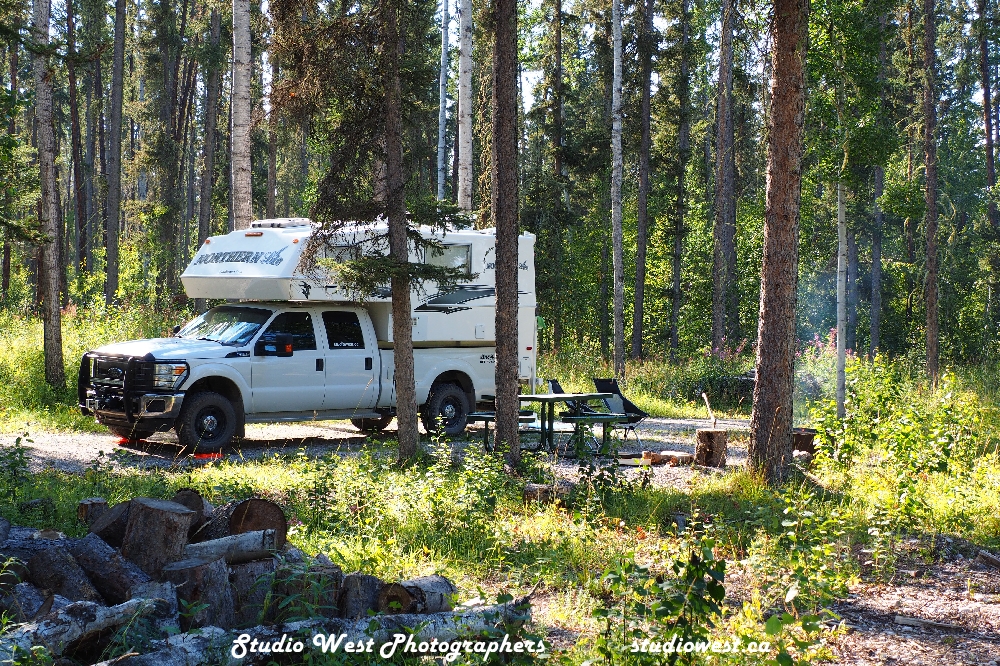
The Bonanza Campground nothing fancy but workable.
Tues. July 26th. Day 23 Mileage 4293.3 drove 459.3 kms today more than planned. Left Dawson City this morning with the plans of going to Tombstone National Park on the Dempster but it was rainy, muddy and lots of construction on a bad road to begin with we opted to add Yellowknife NWT to our travels instead. We stayed overnight at a Territorial Park Fox Creek a beautiful spot right on the lake with water pure and clean, would highly recommend this campground, nice creek running through it, good tenting sites and could accommodate fairly large rigs. The drive today was bad, lots of construction long wait times and very rough roads through the construction and very muddy as well. We were stopped for a while for a semi that was on fire no one was hurt.
Not so good for this trucker along the Yukon Highway.Fox Creek Territorial Park along the Yukon Highway.Evening at Fox Creek very peaceful.The beauty of the truck camper right on the beach in a spot too small for most.Cannot resist the beauty of light and shadows with a little colour.Cool clear water probably could drink it.
Wed. July 27th. Day 24 Mileage 4476.9 traveled 183.5 kms today from Fox Creek campground south of Carmacks, Yukon to Squanga campground another Territorial campground on a beautiful little lake. The trip included a stop at Whitehorse the capital of the Yukon, around 35,000 of the Yukon’s 45,000 people live there so is a very busy center and a hub to the US and Dawson city. They say there is gold in the Yukon and there still is if you can file a claim on a carwash….A wash back home that would be around $12 set me back $38.50 here. It’s a gold mine with all the construction going on and the many gravel roads you don’t see many shiny clean vehicles around here now I know why. We picked up an extra gas can for our trip across to Yellowknife and fueled up for $1.99.9/litre. It’s too bad we have to follow our tracks back but have been told by several travellers we met that #4 or the Campbell highway is very rough. We have had enough rough roads on this trip with construction everywhere. When asked where we spent our summer we can say visiting road construction sites. Rained a little today but stopped and we enjoyed a campfire.
That’s about it for this post next post our visit to the Gold mining equipment of the Yukon and Dredge #4. Actually had a few more subscribers follow along thanks for finding my ramblings and photographs interesting. Appreciate your feedback as well. It’s tough to balance spending time on the computer when surrounded by interesting people and the beauty of nature. We have met people from all over the world and it’s amazing how many ties there are to good old Saskatchewan.
Subscribe if you wish notification of posts and may the wind always be on your back while travelling. We hope to see you down the road….
Made it to Dawson City feel gold fever setting in.
Day 20 Mileage 3,755 kms, travelled 207 kms today from Moose Creek campground to Klondike River Campground just outside Dawson City. Today the road was narrower, lots of mountain hills and construction again in several places, slow going but that’s ok we have nothing but time. After checking in to the campsite we toured Dawson City and what can I say about Dawson City that has not been written about thousands of times. The history of this town is incredible.
The frontier town feel and look Dawson City.Lots of accommodations for everyone.The paddle wheeler played a huge part of Dawson’s growth and prosperity during the gold rush era.Gold Fever!
The city is no where near as vibrant as it was in its hay day but still has the charm of a frontier mining town. I loved the old buildings, some restored and some not so much. It’s been a tough slug for the merchants of this frontier town with covid shutting down the borders for two years. The visitors to Dawson this year was again a little down due to high fuel costs, as high as $2.50/ litre we found. The other problem they face is the lack of workers in all areas from hotel work to retail sales and trades. Stores were closed either early or on the weekends because of lack of staff. I had several job offers, now that’s getting desperate.
Wonder if it was the western hat or she is just friendly… Flora Dora HotelGold is still in Dawson City.A great grocery store with prices comparable to most urban stores.Old time fiddle music during the weekend farmers market with some great produce and local crafts.A lot of the original buildings are being restored.Some may be beyond repair.If only these walls could talk.This was probably a pretty upscale cabin in its day.St Andrew’s Church still standing.This paddle wheeler was saved, many are in the paddle wheeler graveyard another blog to come.Another being salvaged for future generations to see.
The information centre in Dawson was very helpful in directing us to what to see and do while visiting and any tours you want to take are booked there. We found out where we could find a sani dump and free potable water to fill the camper with. The lady who runs the Northwest Territories information centre is a local resident for many years and a wealth of knowledge. If you are travelling the Dempster Highway she is a must to talk to. They have a book of experiences written by those who have travelled it and survived. Dawson City was everything I had read about and now had experienced it…somethings you just don’t get from a book that real life offers.
Day 21
Our ride across the mighty Yukon river to our campground and the start of the Top of the World Highway.
Mileage 3816 kms, travelld only 60.7 kms today from Klondike River campground and toured Dawson City walking some more absorbing the history and culture of the community. Today we took the ferry across the Yukon to the Yukon River Territorial campground located at the start of the Top of the World Highway. We are finding the Yukon parks great as they are first come first served no reservations and they cost $20 cash or $18 when you purchase camping passes from retailers. The parks are clean well laid out nice sites and no hookups just dry camping. We noticed very little generator use in the parks as it is discouraged so everyone can enjoy the quiet found in nature. Most travellers such as us are used to “boon docking”.
All of the Yukon territorial campgrounds were great, no reservations cash or prepaid pass.A lot of RVS shipped from other countries full self contained like this one we saw on the road.The new mode of transportation on the Yukon. Very colorful business fronts in this town.
Yes today I bought a gold pan for an investment of $13 which I will never make back, perhaps a tax write off? Again we met a lot of travellers from all over the world, I would say the majority were not from Canada. Travelling by motorcycle, bike and every type of RV possible from a SUV to overland vehicles and monster overland vehicles, stuff we don’t see in Canada for sale. Lent my axe today to two young men from Victoria BC who had ridden bikes from there and were going to ride to the Arctic Ocean, I did mention they were “young” right! Another gentleman in his 70’s such as myself had been pretty much everywhere in Canada and most of the USA canoeing and staying in a tent. He was preparing to do a fly in tour and canoe to the Arctic Ocean…never say age is a factor it’s just a state of mind. When we waved goodbye he said “never quit travelling”.
What can you expect from a $13 dollar investment.This is how it’s done today more of an investment perhaps more return.The Cadillac of the north.It’s good to see history so well preserved, and Dawson City is doing it. Even when there are those who feel we got to hide it and tear it down.Part of our history whether we like it or not.The Sheriff in town!
I’m going to let my photos show Dawson City and area as the history has been told it was our go to place and on that list was the Dredge #4 and the Paddle Wheeler graveyard. These will be featured separately in my upcoming blogs Dawson City was everything I read about and glad we made it here more to come.
Subscribe to be notified of future blogs and thank you to the new subscribers, it helps when one has to sit on a nice day sitting on the shores of Great Slave Lake and put thoughts to words and edit through 100’s and 100’s of images. Thanks it’s great to be able to share and we hope to see you down the road….
Day 18 Mileage 3209.7 we drove from Johnsons Crossing Yukon today to Lake Laberge where we camped for the evening at a Yukon campground, again only $18 pre- purchased. A great campground on the lake with nice sites, pit toilets, tables and firewood included.
Laberge Lake home for a night.Laberge a beautiful lake along the highwayLaberge where we met a young couple from Sweden.As always great campsites.
We stopped over in Whitehorse, the capital of the Yukon. A growing community, the population of Whitehorse is estimated at 42,986. They say 75% of the Yukon population live in Whitehorse and surrounding area. Dawson City is the second largest community with a population of around 1300, all other towns have less than 1000 residents.
Whitehorse was named for the Whitehorse Horse Rapids which before the river was dammed resembled the mane of a white horse. Whitehorse was established as a transportation hub in the building of the Alaska Highway. We visited the Yukon Travel Museum which featured a lot of the equipment in the building of the Alaska Highway and various forms of travel in the area through the ages. A very interesting and must visit museum.
Yukon travel museum Whitehorse.A monster snow train used in the building of the Alaska Highway.One of the Paddle Wheels of the Yukon key to moving people and supplies.Just a lot of history almost too much to absorb comes from this area.
Situated right next to the travel museum we noticed the Yukon Beringia Interpretive Centre and took the tour. There we met Ice Age giants like the woolly mammoth and the scimitar cat that ruled ancient Beringia. We learned about this era looking at skeletal remains, and interactive exhibits and we sat through a very interesting film going back 40,000 years. I had to look up Beringia and found out it was the land mass that used to connect northwest Canada and Alaska with northeastern Siberia, Russia about 11,700 years ago, just a little before my time. Because I was not around then how could I have possibly known about this, perhaps the day I skipped school. Now we know a little more about the inhabitants of the Ice Age.
The Beringia center.They did not tell us …we bought bear spray!This history is even before history.Yes Jeff Kwansy there really was a beaver this big.
Just pass Whitehorse we took number two highway or the Klondike Highway towards Dawson City. Whitehorse had the cheapest gas in a while at $1.999 sad when we think that is cheap.
Day 19 Mileage 3548 km. we drove 338.4 km. today. We left Lake Laberge today to Moose Creek Yukon campground at 559.9 km or 15 miles north of Stewart Crossing. It had rained all day so we drove further than planned but the rain stopped so we enjoyed a campfire then it rained during the night. A lot of road construction, one of many areas had the signs removed and we almost missed the turn off to the campground. On the way we stopped at the town of Carmack for lunch, the town of Carmack was established near a trading post established in 1893 by George Washington Carmack. George was intending on trading furs with the natives and had discovered coal in the area but never became successful trader or coal miner. George ended up like thousands of others panning for gold and one of the Klondike’s first gold discoverers.
Moose Creek.Miles and miles or in Canada kms and kms.Along the highway.A very common view this trip.Carmacks there is history everywhere here.A great lunch stop.
Pelly Crossing, the site of forest fire fighting efforts this summer as flames got close to the highway features a very long bridge over the Pelly River, one of many in the Yukon. Charlotte’s son Jeff was sent from Kelowna to Pelly Crossing to cook for the fire crews, we hoped to see him there. However the fires were under control and he was shipped to the interior of BC to feed the hungry fire crews there. The fires we had heard about were, as mentioned, under control and we really never experienced any smoke.
Pelly Crossing bridge.The huge Pelly River.
That’s it for this post will share the images we were allowed to take and some along the highway. The Klondike Highway just got a lot narrower and a little rougher, they skimped on the road shoulders.
Hope to see you down the road, see what tomorrow brings…
Day 16 Mileage 2953 kms. Travelled 259 kms from our gravel pit overnight stop to the community of Teslin, Yukon. Before the Alaska Highway was built, Teslin was a remote paddle wheeler outpost where people hunted, fished and trapped off the land. This is a very interesting Tlingit community rich in their culture and proud of their heritage.
Along the Alaska highway to the YukonSpectacular views through the windshieldAlaska highway on the way to TeslinOne of many 100’s of bridges in the Yukon. The famous Teslin bridge one of the longest spanning bridges on the Alaska highway.
We stopped at the Heritage Center and learned a lot about the culture of their people with the help of their Elder Chief. He said we could call him Sam. Teslin derives its name from tas’ten meaning “long sewing sinew” in the Tlingit language. It describes the 148 km or 98 mile long and narrow lake. The citizens there rely on hunting, fishing and gathering healthy foods from the land. They prize the salmon which they say navigate the longest migration run in the world to return to them each summer. Their Oral traditions, Sam told us, spoke of their people travelling from coastal Alaska inland to trade for hundreds of years. Tlingit ancestors began living permanently in the Yukon in the 1800’s. More families arrived in the past century and they now operate as a self-governing First Nation.
Crossing the Teslin bridge on steel mesh.Teslin Tlingit Heritage Center visit.The dugout canoes still used today for celebrations and special occasions.The modern dugout is actually made of fiberglass but very ornate.Totem poles representing the five clans of Tlingit. Raven, Frog, Wolf, Beaver and Eagle.The Raven clan totem pole.The cabin of the Elder herb lady on site where living off the land is an everyday part of gathering healthy foods.The beautiful Fireweed the official flower of the Yukon can be seen everywhere along the roads and in the woods of the Yukon.
From there we went to the George Johnston Museum located just off the highway and displays Tlingit native ceremonial regalia, hunting artifacts and rare local photographs taken by George Johnston, a venerated Elder (Kash Klaa). The story of George Johnston is amazing. He brought a 1928 Chevrolet by steam paddle wheeler to Teslin that had no roads and would taxi people for a dollar on a four mile road he had built. In the winter he painted it all white and drove it on the 98 mile frozen lake to hunt wolves.
The George Johnston museum in Teslin a must see for the history of the area and the customs. The George Johnston museum as seen from the highway.The history and story of a colorful character of Teslin.Our home at the Teslin Lake government campground just outside of Teslin.The beauty of RV travel is the folks you meet along the way. Not in order- Antoine, Laurenie, Marie and Benjamin enjoying life on the road.
The cost for the heritage center was five dollar each and the museum six dollars each, money very well spent. We even spotted a bear running across from the Heritage Center which was a bonus. Tonight we will spend at the Yukon campground just ten kilometers out of Teslin for the flat fee of $18. It’s a nice evening and firewood is supplied so will have a fire and enjoy the evening off the road. On our evening hike we met some very nice young people traveling from Montreal to Alaska in a unique truck set up with two roof top tents. We have met so many great folks on the road from all over in all sorts of different rigs from tents, roof top tents, cars, mini vans, cargo vans to big class A and overland rigs. Of course the number one method of travel is the truck camper, I may be a little biased but pull types and fifth wheels are few and far between unless they are small teardrop or off road trailers. Filled up today in Teslin for @2.03 /litre.
Day 17
Mileage 3019.6 kms. Drove only 66.6 kms today to Johnson’s Crossing. The campground there where we had internet and power. Great showers and we did laundry as that is one thing our camper lacks that the cabin has. Here we could fill up with water and has a dump station, yep in an RV when you flush that is not the end of it. Temperatures have remained around 20 to 22 celcius and dropping to our low tonight of four. Made chili tonight, it was that kind of evening, worked on the blog and did maintenance and house cleaning. Johnsons Crossing is known for its famous cinnamon buns. While we were there a number of Class A motor homes were stopping in for the buns. They had called ahead and warned the owners to have them ready, at least 24 in the group all Americans heading to Alaska. As in the north I cannot stress enough about having cash available. The couple who run the shop said the internet is very unstable and although we used it to pay our $37 camp fee, the next morning it was down when we wanted to purchase Yukon camp passes. Also fuel up when you can, his fuel shipment was late coming and was out of gas and diesel. Great couple, a very basic campsite at the end of a very high, long bridge. When I asked if the name Johnsons Crossing came from the George Johnston from Teslin, he said no, probably not, could have been some American general or something he was not sure. He did tell me though he believed the elder native woman from the area that said it was because the first ferry across the river had two Johnson motors, so let’s go with that.
The beautiful hike into the Rancheria Falls along the highway to Johnsons Crossing.Tier one of the Rancheria Falls.The beautiful forest surrounding the falls.Tier two of the falls.Rushing rivers everywhere in the Yukon.Rancheria Falls a must stop.Clear running water as the melt in the mountains continue late this year.The bridge to Johnsons Crossing.Another long span and high bridge of the Yukon.This doesn’t mention the famous cinnamon buns available here.On the road again see what tomorrow brings our way.
Ok going to sign off tomorrow we will head to Whitehorse and stock up on supplies. Glad you are interested enough to follow along gives me a reason to keep showing and sharing this beautiful land, its cultures and people who live here. Subscribe if so inclined to be notified when I can get internet to get this trip posted… stay safe and we hope to see you down the road….
The Alaska highway is in excellent shape so far as we head for the Yukon.
Day 11 on our way to the Yukon, mileage 1701 a very nice sunny day around 20 celsius but again windy we headed into Fort St John for the day as Char had to be in cell range for a important call. We found it very hard to find anyone that topped up propane tank in town finally found co-op service stations did. The other stations wanted $34 for exchange I topped up for $15. Fuel today was 2.02 per litre. We stayed at Walmart and met a really nice chap from Texas who lives in his van and delivers parts all over North America. He was delivering a John Deere engine to a dealer in Fort St John. We met another couple from Wisconsin that were on their way back from driving the Dempster highway and did not have good luck, they cracked two rims. On the way back they had to camp on the highway for 20 hours with others as the fires shut down the roads. We were informed then the forest fires were starting to get under control they said 5,000 lightning strikes had been recorded in one day. This was good news to us as only two weeks ago they were advising non unessential travel to the Yukon.
Beaver Lake campground free.
Day 12 Mileage 2124.7 km we traveled 423.5 km today from Fort St John to Beaver Lake just west of Fort Nelson. The campgrounds were packed at Fort Nelson as an Airstream tour was booked there as well as a large motor coach tour. We were happy when we found Beaver Lake forest service campground at no charge with picnic tables and fire rings. Scrounged firewood and cut some from dead trees in the surrounding forest. Met a young couple who pulled in after us in a Land Rover they had shipped from France to Halifax. They have been on the road 2.5 months and plan on a canoe trip in the north before continuing their travels for the next two years. Filled up today for $2.18/litre.
Supper on the go after cutting and splitting firewood at Beaver Lake.
Day 13 Mileage 2357km travelled 232.3 km today from Beaver Lake to Muncho Lake through the highest pass on the Alaskan highway at 4,250 feet. a lot of construction in this area and some wait times slow going but not bad. Char said the scenery was beautiful from that high up, I was watching the road so will take her word for it. Filled up at Toad River for $2.39 /litre the highest on the trip so far. Muncho Lake is a beautiful jade color and very cold. We were lucky to get the last campsite on the lake as we pulled in early today. The highway runs along side the lake cut out of the side of a mountain and we are told it was the most expensive part of the Alaska highway to be built. Equipment was lost to the very deep lake around 300 feet deep as all the rock had to be hauled away as they carved out the base. It was a very beautiful spot to unwind after the drive through the summit.
Muncho Lake.The view from our campsite.With all sites along the lake this is a very popular campsite. Still snow in the mountains at Muncho Lake.Leaving Muncho Lake continuing to the Yukon.
Day 14 Mileage 2412km a light travel day today from Muncho Lake to Laird Hot Spring only 64 kms. A very popular spot along the highway, we checked in early, there is no power sites or services here just dry camping. We paid $27 and that included our pass into the hot springs that were $5 each. Again firewood was $15 for a small bundle. The mosquitoes were BAD! Not in the hot springs but at the check in and campground. Even the workers were wearing nets. While in the hot springs we met people from all over some travelling full time and others just for a spell. No outside tonight I worked on the blog and Char organized clothes which again we brought more than we need. No internet service and again cash only.
Looking forward to a dip in the hot springs we made it to the famous springs.An electric fence around the campground helps separate the humans and the bears in the area.An overview of the springs.At one end the water is very hot it overflows into a cooler area.A board walk connects the campground to the springs about a ten minute walk.From the walkway to the hot springs wildlife can be spotted and one has to be Bear Aware.The Hanging Gardens at the hot springs is a must see.The terraced hill side features the hanging flowers and plants all done by nature.Nature, naturally in all its beauty.Just outside of the gates at the hot springs these buffalo were dusting from the mosquitoes.
Day 15 Mileage 2675 km filled up at Contact Creek for $2.15 litre. Lots of up and down mountains again on the way to Watson Lake and the sign post village. Watson is a very friendly RV town we got a free dump and free potable water here. The sign post village is just something one has to experience it is hard to explain the over 100,000 signs by the looks of the a lot were stolen from communities around the world. We left our small sign there to document our passing that way. We checked out the museum and watched a movie on the building of the Alaskan Highway. We were able to pick up our Yukon Territory passes for camping at Watson they are $18 each a little saving as at the sites it is $20 cash only. We are finding the Territorial campsite quite nice they have tables and fire rings and pit toilets. The camp site Gold Nugget was $75 US per night we passed on that and further down the road found a nice secluded gravel pit away from the highway for zero down and zero per night. Took a hike and had a small campfire in a very quiet spot now can’t beat that.
Made it this far.Watson Yukon famous sign post forest.Thanks to a couple of American bikers we had a photo of the two of us.Leaving our little sign amongst 100,000 other signs.Just to show we passed this way.Some of the early equipment used in building the highway.The entire highway built using this equipment in less time then it would take us to do an environmental study today.Our quiet beautiful gravel pit campsite just out of Watson.A visitor to our gravel pit campsite.Another free campsite along the way.Bucking Horse River campground.Along the way.A great stop and hike into this water fall in the Laird Canyon. One hike two falls a bonus!Feeding time along the highway.Highest pass on the Alaska highway.Stops along the way.As far as the eye can see.
Well I know right now I will not spoil anyone’s future trip here by showing my images as they cannot even capture the vastness of the land and its beauty. There is a depth to the beauty that my camera cannot capture one just has to see it for themselves… We will continue this journey at the next cell coverage
Hope to see you down the road…..Watch for the studiowest.ca Northern Lite